

Hey there! As a supplier of residential freeze dryers, I've seen firsthand how these nifty machines can revolutionize food preservation at home. One of the most common questions I get is, "How does a residential freeze dryer handle different food densities?" Well, let's dive right in and explore this topic.
First off, what exactly is a residential freeze dryer? It's a device that uses a process called freeze-drying to remove moisture from food. This process involves freezing the food, then reducing the pressure and adding heat to turn the ice directly into vapor, a process known as sublimation. The result is food that's lightweight, easy to store, and retains most of its nutritional value and flavor.
Now, let's talk about food densities. Different foods have different densities, which can affect how they freeze-dry. For example, foods with a high water content, like fruits and vegetables, tend to have a lower density. On the other hand, foods with a lot of solids, such as meats and cheeses, have a higher density.
When it comes to handling these different densities, a good residential freeze dryer is designed to be versatile. Most models have adjustable settings that allow you to customize the freeze-drying process based on the type of food you're working with. For foods with a lower density, like strawberries or cucumbers, you might need a shorter freeze-drying time and lower heat settings. This is because these foods have less mass to freeze and less moisture to remove.
On the flip side, higher-density foods like beef or hard cheeses require a longer freeze-drying process. They need more time to freeze completely and more energy to remove the moisture trapped within their dense structure. That's why many of our Freeze Drying Equipment for Home Use come with pre-programmed settings for different food types. These settings take into account the density of the food and adjust the temperature, pressure, and time accordingly.
Another factor to consider is the size and shape of the food. Smaller pieces of food will freeze-dry more quickly than larger ones, regardless of their density. That's because there's more surface area exposed to the cold and the vacuum, which speeds up the sublimation process. So, if you're freeze-drying a large piece of meat or a whole fruit, it's a good idea to cut it into smaller, more uniform pieces.
Let's take a closer look at some specific examples. If you're using our Food Freeze Dryer Machine for Home to dry fruits like apples, you'll notice that they have a relatively low density. Apples are mostly water, so they'll dry out fairly quickly. You can slice them thinly and spread them out on the trays to ensure even drying. Our machine's adjustable temperature settings allow you to set a lower temperature for a gentler drying process, which helps preserve the flavor and texture of the apples.
Now, let's say you want to freeze-dry some chicken breasts. Chicken has a higher density than apples, so it will take longer to dry. You'll need to make sure the chicken is cooked and cut into small pieces before placing it in the freeze dryer. You can also use a higher heat setting and a longer drying time. Our machine's programming will automatically adjust the process to ensure that the chicken is thoroughly dried and safe to store.
One thing I should mention is that some foods might require pre-treatment before freeze-drying. For example, some vegetables might need to be blanched to stop enzyme activity and preserve their color and nutritional value. And meats might need to be seasoned or marinated to enhance their flavor. These pre-treatments can also affect how the food freezes and dries.
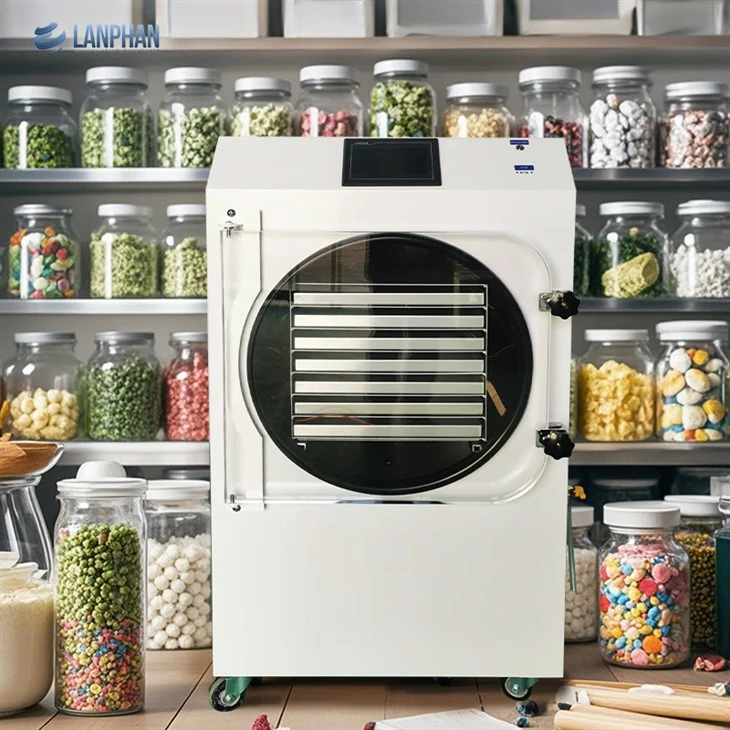

But what if you're looking for something a bit more hands-on? That's where our Diy Food Freeze Dryer comes in. This DIY option allows you to build your own freeze dryer using some basic components and our easy-to-follow instructions. It's a great way to save money and customize your freeze-drying setup. You can adjust the design to suit your specific needs and the types of food you want to dry.
And for those who are really into DIY, our Home Built Freeze Dryer provides all the details you need to construct a more advanced freeze dryer from scratch. It's a fun project that can give you a deeper understanding of how the freeze-drying process works and how to handle different food densities.
Now, you might be wondering about freeze-drying breast milk. Our Freeze Dry Breast Milk Machine is specifically designed for this purpose. Breast milk has a unique density and composition, and our machine is engineered to preserve its nutritional value and freshness during the freeze-drying process. It's a great option for moms who want to store breast milk for later use.
In conclusion, a good residential freeze dryer can handle different food densities with ease. By adjusting the settings and taking into account the size, shape, and pre-treatment of the food, you can achieve great results every time. Whether you're a foodie looking to preserve your favorite ingredients or a mom wanting to store breast milk, our range of residential freeze dryers has you covered.
If you're interested in learning more about our products or have any questions about handling different food densities, don't hesitate to reach out. We're here to help you make the most of your freeze-drying experience. Let's start a conversation and see how we can meet your needs!
References:
- Smith, J. (2020). The Science of Freeze-Drying. Food Preservation Journal.
- Johnson, A. (2019). Home Freeze-Drying: A Practical Guide. DIY Food Press.